
Proceedings
Browse and discover papers that have been presented at international conferences and published as part of our proceedings.
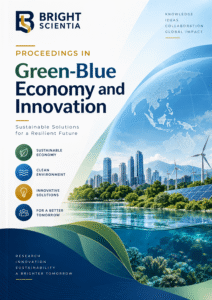
Proceeding
Proceedings in Green-Blue Economy and Innovation is an international, peer-reviewed, open-access proceedings publication published by BRIGHT Scientia. It provides a scholarly platform for the publication of selected papers from conferences, symposia, workshops, and related academic meetings that address contemporary issues in green economy, blue economy, innovation, entrepreneurship, sustainability, governance, and transformation, with particular emphasis on the Indonesian context and its relevance to other developing and emerging economies.
Overview
Proceedings in Green-Blue Economy and Innovation is an international, peer-reviewed, open-access proceedings publication published by BRIGHT Scientia. It provides a scholarly platform for the publication of selected papers from conferences, symposia, workshops, and related academic meetings that address contemporary issues in green economy, blue economy, innovation, entrepreneurship, sustainability, governance, and transformation, with particular emphasis on the Indonesian context and its relevance to other developing and emerging economies.
The proceedings is established to promote rigorous, relevant, and internationally oriented scholarship that connects locally grounded research with broader global debates. It particularly welcomes contributions that offer analytical, empirical, and policy insights into sustainable development, enterprise transformation, institutional change, and innovation in Indonesia and comparable settings.
Aim & Scope
Proceedings in Green-Blue Economy and Innovation is an international, peer-reviewed, open-access proceedings publication under BRIGHT Scientia. It provides a scholarly platform for the dissemination of high-quality research addressing major contemporary issues in sustainability, innovation, enterprise, governance, and development, with a strong emphasis on the Indonesian context and its relevance to other developing and emerging economies.
The proceedings recognises Indonesia not merely as a setting for empirical inquiry, but as a strategically important context for understanding broader global transformations related to green economy, blue economy, entrepreneurship, sustainable development, institutional change, and innovation. As one of the world’s largest archipelagic and emerging economies, Indonesia offers a significant setting for examining questions of coastal and marine development, environmental transition, inclusive growth, business transformation, and policy innovation.
The proceedings aims to advance scholarly dialogue on globally significant issues emerging at the intersection of green economy, blue economy, innovation, entrepreneurship, sustainability, governance, and transformation. It welcomes contributions from academics, researchers, practitioners, policymakers, professionals, and institutional stakeholders whose work contributes to current discussions on sustainability transitions, innovation ecosystems, inclusive growth, and responsible development.
The proceedings publishes rigorous and relevant contributions that demonstrate conceptual clarity, methodological soundness, analytical depth, and practical or scholarly significance. Submissions may employ quantitative, qualitative, mixed-method, review-based, or case-based approaches, provided that they make a meaningful contribution to knowledge and practice.
The scope of the proceedings includes, but is not limited to, the following topics:
- green economy and sustainable development
- blue economy, marine-based development, and coastal livelihoods
- innovation, entrepreneurship, and entrepreneurial ecosystems
- MSME transformation and sustainable enterprise development
- circular economy and resource-efficient production systems
- digital transformation, platform economy, and technology adoption
- sustainable finance, green investment, and financial inclusion
- Islamic finance, halal economy, and ethical business practices
- ESG, sustainability reporting, and corporate accountability
- public sector governance, decentralisation, and development policy
- regional development and local economic transformation
- social entrepreneurship and community-based enterprise
- supply chain sustainability and responsible business practices
- energy transition, climate-related policy, and resilience
- sustainable tourism, fisheries development, and food systems
- consumer behaviour, ethical consumption, and emerging-market dynamics
- carbon disclosure, environmental reporting, and sustainability-related accountability
- governance, institutions, and strategic responses to development challenges
The proceedings particularly encourages submissions situated in Indonesia or those offering comparative insights relevant to other developing, coastal, island, and emerging-market economies. In doing so, it seeks to cultivate a body of scholarship that is locally grounded, globally connected, and responsive to the major transformations shaping contemporary economic and business life.
Author Guidelines
General Information
Proceedings in Green-Blue Economy and Innovation welcomes the submission of original and high-quality manuscripts that are relevant to the aims and scope of the proceedings. The publication seeks scholarly contributions addressing contemporary issues related to green economy, blue economy, innovation, entrepreneurship, sustainability, governance, and transformation, particularly in relation to Indonesia and other developing and emerging economies.
All manuscripts must be written in English and prepared in a clear, scholarly, and professional style suitable for an international academic audience.
Types of Contributions
The proceedings accepts the following types of manuscripts:
- full research papers
- review papers
- conceptual papers
- case-based studies
- selected short scholarly communications, where appropriate
All submissions must demonstrate academic relevance, conceptual clarity, methodological soundness, and a meaningful contribution to knowledge or practice.
Manuscript Preparation
Authors must prepare their manuscripts using the official proceedings template.
The manuscript template is available on this website and should be used for all submissions. [Template link will be added here later.]
Authors are expected to ensure that their manuscripts conform to the formatting and structural requirements stated in the template before submission.
Language
The official language of publication is English. Authors are responsible for ensuring that their manuscripts are written in clear and grammatically sound English prior to submission.
Manuscripts with serious language problems may be returned for revision before entering the review process.
Citation and References
All in-text citations and reference lists must follow APA Style 7th Edition consistently. Authors are responsible for ensuring the accuracy, completeness, and consistency of all references included in the manuscript.
Every source cited in the text must appear in the reference list, and all entries in the reference list must be cited appropriately in the manuscript.
Originality Requirement
Submitted manuscripts must be original and must not have been published previously or be under consideration for publication elsewhere at the time of submission.
All submissions will be screened for originality as part of the editorial process. The proceedings does not accept manuscripts with a similarity or plagiarism score exceeding 20%. A similarity score below this threshold does not automatically guarantee acceptance, as the editorial team will also assess the nature and source of any overlap.
Submission Process
Manuscript submissions for Proceedings in Green-Blue Economy and Innovation are currently being handled through the MEFT Summit 2026 online submission platform while the proceedings submission platform is under maintenance. Authors may use the link below to register and proceed with manuscript submission. Any future updates to the submission system will be announced through the official proceedings website.
Register for submission: https://journal.unhas.ac.id/index.php/meftsummit/user/register
Login for submission: https://journal.unhas.ac.id/index.php/meftsummit/login
Authors who already have an account may proceed directly through the login option available on the submission platform. The current registration page requires authors to provide their name, affiliation, country, email address, username, password, and consent to the privacy statement.
Peer Review
All submissions undergo editorial screening followed by peer review. Manuscripts are evaluated on the basis of their relevance to the proceedings, originality, scholarly contribution, methodological soundness, ethical compliance, and clarity of presentation.
The editorial team reserves the right to reject manuscripts that do not meet the basic academic, technical, or ethical requirements of the proceedings.
AI Usage
Authors may use generative AI or AI-assisted tools only in a limited and transparent manner, such as for improving language, readability, or manuscript organisation. Authors remain fully responsible for the accuracy, originality, citations, interpretation, and final content of the manuscript.
Any substantive use of AI in manuscript preparation must be disclosed at the time of submission. AI tools cannot be listed as authors.
Ethical Responsibilities
Authors must ensure that their submissions comply with the ethical standards of the proceedings. This includes originality of work, proper citation of sources, responsible authorship, honest reporting of data and findings, and disclosure of any conflicts of interest.
The proceedings follows COPE as its principal ethical framework and adopts the IEEE Conference Standards as its proceedings-specific benchmark.
Revision and Final Submission
Authors may be requested to revise their manuscripts in response to editorial comments or peer review feedback. Revised manuscripts should be resubmitted within the specified deadline and should address the comments carefully.
For accepted papers, authors may also be required to submit a final version that fully complies with the official template and publication requirements.
Contact for Authors
For questions related to submission, manuscript preparation, or the review process, authors should contact the editorial team or publisher through the contact details provided on the website.
Publishing Info
Publication Overview
Proceedings in Green-Blue Economy and Innovation is an international, peer-reviewed, open-access proceedings publication published by BRIGHT Scientia. The proceedings serves as a formal scholarly outlet for the publication of selected papers presented at conferences, symposia, workshops, and other academic meetings that align with its thematic and editorial focus.
The publication is established to support the dissemination of rigorous and relevant research on contemporary issues related to green economy, blue economy, innovation, entrepreneurship, sustainability, governance, and transformation. As a proceedings publication, it is intended to provide a credible and visible academic platform for the publication of high-quality conference papers that contribute to current scholarly, policy, and professional discussions.
The proceedings places particular emphasis on research situated in Indonesia and on studies that generate insights relevant to other developing and emerging economies. At the same time, it maintains an international outlook and welcomes contributions that connect local and regional evidence with broader global debates.
Publication Model
The proceedings operates as a volume-based scholarly publication under a stable proceedings title. Each volume is developed from a specific academic event or scholarly meeting and contains selected papers that have successfully passed the required editorial and peer-review process.
This publication model enables the proceedings to maintain continuity in title identity while allowing each volume to reflect the distinctive theme, organisers, and scholarly contributions of a particular conference or event. It also supports a structured and recognisable publication framework for authors, readers, and indexing services.
As a proceedings outlet, the publication is designed to preserve the academic value of conference-based research while ensuring that accepted papers meet proper scholarly, editorial, and ethical standards before publication.
Publisher
The proceedings is published by BRIGHT Scientia, an academic publishing initiative committed to supporting the dissemination of scholarly works in proceedings, journals, and books. Within this role, BRIGHT Scientia provides publication oversight, editorial governance support, and the publishing infrastructure necessary for the preparation, release, and long-term accessibility of each proceedings volume.
The publisher is responsible for maintaining consistency in publication standards, ensuring that each volume is issued within an organised editorial framework, and supporting the visibility and integrity of the proceedings as a scholarly publication.
Editorial Management
Each volume of Proceedings in Green-Blue Economy and Innovation is managed by the appointed editors, guest editors, or conference editors under the oversight of BRIGHT Scientia. The editorial team is responsible for managing the academic and editorial preparation of the volume, including the coordination of submissions, the administration of peer review, the selection of accepted papers, and the preparation of final manuscripts for publication.
The editors are expected to ensure that all accepted papers fall within the aims and scope of the proceedings and meet appropriate standards of originality, methodological soundness, clarity, and scholarly contribution. They are also responsible for maintaining transparency and fairness in the editorial process and for ensuring that the published volume reflects the academic quality expected of an international proceedings publication.
Peer Review Process
All manuscripts submitted for publication in the proceedings are subject to editorial screening and peer review prior to acceptance. Initial screening is conducted to assess the manuscript’s basic suitability for the proceedings, including its thematic relevance, general academic quality, and compliance with submission requirements.
Manuscripts that pass the initial screening are then reviewed by qualified reviewers selected by the editorial team. Reviewers are asked to evaluate the manuscript on the basis of its originality, clarity of research purpose, conceptual or theoretical grounding, methodological appropriateness, analytical quality, validity of findings or arguments, relevance to the proceedings scope, and overall contribution to knowledge or practice.
Final publication decisions are made by the editors on the basis of reviewer feedback, editorial judgment, and compliance with the proceedings’ standards. Where appropriate, each volume may also provide a peer review statement to enhance transparency regarding the review model and editorial process applied.
Open Access Policy
Proceedings in Green-Blue Economy and Innovation is published as an open-access proceedings publication. This means that all accepted papers are made freely available online without subscription barriers, allowing readers to access, read, and use the published research in accordance with the applicable licensing terms.
The open-access model is adopted in order to support wider dissemination, greater accessibility, and stronger academic visibility of the published work. It is intended to ensure that research findings can reach not only academic audiences, but also practitioners, policymakers, and other stakeholders with an interest in sustainability, innovation, enterprise, and development.
By adopting this model, the proceedings seeks to encourage broader knowledge exchange and to strengthen the public value of scholarly communication.
Originality and Scholarly Integrity
Authors submitting to the proceedings are fully responsible for the originality, authenticity, and scholarly integrity of their work. Submitted manuscripts must represent original contributions and must not be under consideration for publication elsewhere at the time of submission.
Authors are expected to ensure that all sources are properly cited, that all data or materials are presented honestly and accurately, and that the work submitted does not involve plagiarism, duplicate publication, fabrication, falsification, or other forms of academic misconduct.
The proceedings reserves the right to apply originality checks and to take appropriate editorial action if concerns arise regarding the integrity, originality, or ethical compliance of a submission, whether before or after publication.
Ethical Framework and Conference Standards
The proceedings is committed to maintaining high standards of publication ethics, transparency, and responsible editorial practice. Its ethical approach is guided by the principles promoted by the Committee on Publication Ethics (COPE), particularly with respect to responsible authorship, peer review, editorial independence, conflicts of interest, originality, and the correction of the scholarly record where necessary.
As a proceedings publication, it also adopts the IEEE Conference Standards as a benchmark for proceedings-specific quality and integrity. These standards support the expectation that published papers should arise from a genuine academic meeting, should be relevant to the conference theme, should reflect original research, and should be subject to appropriate editorial and review procedures. They also reinforce the importance of responsible communication regarding publication and indexing expectations.
This dual foundation provides the proceedings with a credible and internationally recognisable framework for ethical and responsible scholarly publishing.
IEEE Conference Standards
BRIGHT Scientia endorses the IEEE global standards and recommended practices for ensuring conference ethics and content quality. The main points of these standards can be summarized as follows:
- A conference is to be held at a physical location during at least one day where researchers with similar interests present and discuss their latest findings.
- A conference needs to have a clear “call for papers” indicating the topics of the
- Conference organizers cannot promise indexing in any database on their
- Conference organizers need to obey international spam
- All accepted papers have to be presented by at least one of the authors at the
- Papers can only be submitted to one conference and must describe current original research of international interest.
- Papers need to be related to the main topic of the conference, e. to the specific “call for papers” of the conference.
- All papers are subject to a final internal review by the publisher and can be rejected without further information or clarification.
For detailed information on current conference ethics and quality control in proceedings publications, please read the IEEE white paper which has been endorsed by BRIGHT Scientia.
Digital Identifiers
To support proper citation, stable access, and discoverability, each published paper should be assigned a Digital Object Identifier (DOI). The use of DOIs helps ensure that papers remain persistently identifiable and easily citable across digital platforms and scholarly databases.
If the proceedings is maintained as a continuing publication title or series, the publisher should also obtain the appropriate ISSN for online publication and, where relevant, a separate print ISSN. These identifiers strengthen the formal bibliographic identity of the proceedings and support its long-term visibility and management as a scholarly publication.
Archiving and Preservation
The proceedings is committed to the long-term accessibility, preservation, and integrity of all published content. To support permanent availability and safeguard the scholarly record, published articles and volumes are preserved through LOCKSS (Lots of Copies Keep Stuf f Safe), a widely recognised digital preservation system designed to ensure reliable and distributed archiving of scholarly content.
Through LOCKSS, the proceedings seeks to maintain secure and durable access to its published materials by preserving multiple copies across participating archive systems. This approach helps protect content against data loss, technical failure, or interruption of access, while strengthening the long-term reliability and continuity of the publication.
By adopting LOCKSS as its archiving and preservation mechanism, the proceedings affirms its commitment to responsible scholarly publishing and to the sustained availability of research for authors, readers, and the wider academic community.
Language of Publication
The official language of publication is English. All manuscripts must therefore be submitted in clear, scholarly English and should be prepared to a standard suitable for international academic readership.
Authors are expected to ensure that the language of the manuscript is sufficiently clear and polished to permit accurate evaluation during peer review and effective communication after publication.
Types of Contributions
The proceedings welcomes a range of scholarly contributions, provided that they are relevant to the publication’s scope and meet the required standards of academic quality. These may include:
- full research papers
- review papers
- conceptual papers
- case-based studies
- selected short scholarly communications, where appropriate
All contributions should demonstrate a clear research purpose or analytical focus, a sound scholarly basis, and a meaningful contribution to ongoing discussions within the field.
Publication Charges
Any publication fee, conference publication charge, sponsorship arrangement, or waiver policy should be stated clearly and transparently for each volume or event. Where publication costs are covered by conference organisers, sponsoring institutions, or partner bodies, this should also be communicated transparently to authors and readers.
The proceedings is committed to clarity in publication-related information and seeks to avoid ambiguity regarding any financial aspect of the publication process.
Policies & Ethics
Ethical Framework
Proceedings in Green-Blue Economy and Innovation is committed to maintaining high standards of publication ethics, transparency, editorial integrity, and responsible scholarly communication. The proceedings follows the principles set out by the Committee on Publication Ethics (COPE) and adopts the IEEE Conference Standards as the proceedings-specific benchmark for conference ethics, conference quality, and publication integrity.
These frameworks guide the conduct of authors, editors, reviewers, conference organisers, and the publisher throughout the submission, review, editorial, and publication process. The proceedings expects all parties involved to uphold honesty, fairness, accountability, confidentiality, and respect for the integrity of the scholarly record.
Publication Ethics and Malpractice Statement
The proceedings does not tolerate plagiarism, duplicate publication, fabricated or falsified data, manipulated citations, inappropriate authorship claims, undisclosed conflicts of interest, or any other form of publication misconduct. All manuscripts must represent original scholarly work and must be submitted in good faith for academic evaluation and publication. COPE’s transparency principles and ethics guidance are used as the main reference point for handling ethical concerns and editorial decisions.
Where ethical concerns arise before or after publication, the editorial team reserves the right to investigate the matter, request clarification or supporting evidence, consult relevant parties, and take appropriate action in accordance with the seriousness of the case and the integrity of the scholarly record. COPE’s guidance on corrections and retractions informs this approach.
AI Usage Policy
Authors may use generative AI or AI-assisted tools only in a limited, responsible, and transparent manner, such as for language improvement, readability, or organisation of the manuscript. Authors remain fully responsible for the accuracy, originality, interpretation, citations, and final content of the submission. Any substantive use of AI in manuscript preparation must be disclosed at the time of submission. COPE states that AI tools cannot meet authorship requirements because they cannot take responsibility for the submitted work.
AI tools, chatbots, or automated systems must not be listed as authors under any circumstances. All named authors must be human individuals who satisfy the proceedings’ authorship requirements and who accept full responsibility for the content of the manuscript.
Editors and reviewers must not upload submitted manuscripts, review reports, decision letters, or any confidential editorial material into public or non-approved generative AI tools. All peer review assessments and editorial decisions must remain the responsibility of human reviewers and editors, consistent with COPE’s position on editorial independence and responsible editorial judgment.
Authorship Policy
Authorship must be limited to individuals who have made a genuine scholarly contribution to the conception, design, execution, analysis, or interpretation of the study and who are able to take public responsibility for the content of the manuscript. All listed authors must approve the final version of the manuscript and consent to its submission for publication.
Individuals who contributed in a more limited way, such as through language editing, technical assistance, or general supervision, should be acknowledged appropriately but should not be listed as authors unless they meet the authorship criteria. AI tools cannot be credited as authors because they cannot assume accountability for the work.
Originality and Plagiarism Policy
Submitted manuscripts must be original, must not have been published previously in substantially the same form, and must not be under consideration elsewhere at the time of submission. All papers submitted to Proceedings in Green-Blue Economy and Innovation will be subject to originality screening using plagiarism detection software as part of the editorial evaluation process.
The proceedings does not accept manuscripts with a similarity score exceeding 20%. Manuscripts found to be above this threshold may be rejected prior to peer review or returned to the authors for clarification or revision, depending on the nature and source of the overlap.
A similarity score below 20% does not automatically guarantee acceptance. The editorial team will also assess the nature of the matched text, including whether the overlap appears in references, standard methodological descriptions, properly quoted material, or potentially inappropriate copied content. Any indication of plagiarism, duplicate publication, unattributed borrowing, or other forms of academic misconduct may result in rejection or further editorial action.
Authors are fully responsible for ensuring that their submissions are original, properly cited, and compliant with the proceedings’ ethical and editorial standards.
Peer Review Policy
All submissions are subject to editorial screening followed by peer review prior to publication. The editorial team assesses manuscripts for relevance to the proceedings scope, originality, scholarly contribution, methodological soundness, ethical compliance, and clarity of presentation. Atlantis-style proceedings publishing explicitly highlights these quality-control elements.
Reviewers are expected to provide fair, objective, constructive, and confidential evaluations of the manuscript. Editors are responsible for managing the review process, considering reviewer comments, and making final decisions based on academic merit, relevance, and compliance with the proceedings’ standards. COPE’s ethical expectations for scholarly publishing and editorial independence underpin this process.
Conflict of Interest Policy
Authors must disclose any financial, professional, institutional, or personal relationships that could influence, or reasonably appear to influence, the research, interpretation, or presentation of their work. Reviewers and editors must also disclose conflicts that could affect their impartiality and should withdraw from the review or editorial process where appropriate.
The purpose of this policy is to protect the fairness, transparency, and credibility of the publication process, consistent with COPE’s best-practice framework.
Editorial Independence
Editorial decisions must be made independently and on the basis of scholarly merit, relevance, quality, and policy compliance. Neither authors, conference organisers, sponsors, nor the publisher may improperly influence editorial judgments. COPE describes editorial independence as a basic principle of scholarly publishing and emphasises the autonomy of editors to make independent decisions.
This principle applies to manuscript assessment, peer review, acceptance decisions, corrections, and any post-publication editorial action.
Conference Integrity Standards
As a proceedings publication, Proceedings in Green-Blue Economy and Innovation follows the IEEE Conference Standards. These standards emphasise that a proceedings volume should arise from a genuine academic conference process, supported by a clear call for papers and a real scholarly meeting. They also emphasise originality of submissions, thematic relevance, author presentation of accepted papers, and responsible communication about publication and indexing. IEEE standards states that conferences must not promise indexing and that accepted papers must be presented by at least one author.
Accordingly, the proceedings expects each supported conference or scholarly meeting to maintain a credible academic programme, fair selection procedures, and responsible communication with authors and participants.
Copyright and Licensing Policy
Authors retain copyright in their work, subject to the licensing terms adopted by the proceedings. The applicable licence and permitted reuse conditions will be stated clearly on the proceedings website and in each published article or volume. The proceedings is committed to transparent copyright and licensing arrangements consistent with its open-access model. Atlantis Press similarly presents copyright and licensing information clearly at the proceedings-series level.
Corrections, Retractions, and Withdrawals
The proceedings may issue corrections, retractions, withdrawals, or other post-publication notices when necessary to preserve the accuracy and integrity of the scholarly record. Such actions may be taken in cases involving serious error, plagiarism, duplicate publication, authorship disputes, ethical misconduct, or unreliable findings.
Any correction or removal decision will be handled carefully, fairly, and proportionately, with reference to COPE guidance and the evidence available to the editorial team.
Confidentiality
Editors and reviewers must treat all submitted manuscripts and related editorial materials as confidential documents. Information obtained through the peer review and editorial process must not be used for personal advantage or disclosed to unauthorised parties.
This confidentiality obligation also applies to the use of digital tools, including AI systems, and is part of the proceedings’ broader commitment to responsible editorial handling and research integrity.
Transparency and Best Practice
The proceedings is committed to transparency in its editorial governance, peer review, ethics framework, open-access practice, and publication processes. This commitment is informed by COPE’s Principles of Transparency and Best Practice in Scholarly Publishing, which are intended to apply to all published content, including proceedings.
The website, editorial information, publication policies, and conference-related procedures should therefore remain clear, accurate, and publicly accessible to authors, readers, and other stakeholders.
Complaints and Appeals
Authors may raise concerns, complaints, or appeals regarding editorial decisions, peer review conduct, ethical issues, or publication procedures by contacting the editorial office or publisher through the designated contact channel. Such matters will be reviewed carefully and handled in accordance with the proceedings’ ethical framework and editorial procedures.
The proceedings aims to ensure that concerns are considered fairly, confidentially, and without undue delay.
Policy Updates
These policies may be revised from time to time in order to reflect developments in publication ethics, conference publishing standards, digital scholarship, and editorial best practice. Updated policies will be posted on the proceedings website and will take effect from the date of publication unless otherwise stated.